Table of Contents
- Let’s Talk About Driving in Sri Lanka
- The Short Answer: Is a Canadian Driving License Valid in Sri Lanka?
- Breaking Down What You Actually Need
- The IDP Explained (Because Everyone Asks)
- Getting Your IDP Back Home in Canada
- The AAC Recognition Permit – Your Tuk-Tuk Golden Ticket
- How Long Your Canadian License Works in Sri Lanka
- Why Driving a Tuk-Tuk is the Best Decision You’ll Make
- Road Rules You Actually Need to Know
- What Happens If You Skip the Paperwork
- Vehicle Rental 101 for Canadians
- Insurance Stuff (Yeah, It’s Important)
- Real Talk: Tips from Canadians Who’ve Done It
- Your Questions Answered
- Final Thoughts
Let’s Talk About Driving in Sri Lanka
You’re planning your Sri Lankan adventure, and you’re wondering if you can just show up with your Canadian license and start exploring.
Maybe you’ve seen photos of colorful tuk-tuks weaving through jungle roads. Maybe you’re tired of organized tours and want total freedom. Maybe you just want to stop at that random beach or roadside tea stall whenever you feel like it.
Whatever brought you here, you’re asking the right question: Is a Canadian Driving License Valid in Sri Lanka?
Let’s break it down in plain English, skip the legal jargon, and get you ready to hit the road.
The Short Answer: Is a Canadian Driving License Valid in Sri Lanka?
Okay, here’s the deal.
Your Canadian driving license alone won’t cut it in Sri Lanka.
I know, I know — you’ve been driving for years back home, you’ve got a spotless record, and your Ontario/BC/Alberta license should be good anywhere, right?
Not quite.
Sri Lankan law requires foreign drivers to carry an International Driving Permit (IDP) alongside their home country license. No exceptions, no shortcuts.
And if you want to drive the most fun vehicle on the island — a tuk-tuk — you’ll need one more thing: an AAC Recognition Permit.
But don’t worry. Getting both is way easier than you think.
Breaking Down What You Actually Need
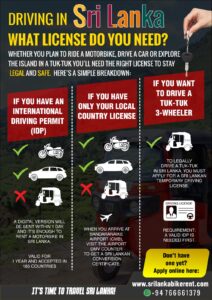
Here’s where it gets interesting. The documents you need depend on what you want to drive.
Riding Motorcycles or Scooters?
You’ll need:
- Your Canadian driving license (with motorcycle endorsement)
- International Driving Permit (yep, digital works fine)
That’s it. Pretty straightforward.
APPLY FOR INTERNATIONAL DRIVING PERMIT !
Driving a Regular Car?
You’ll need:
- Your Canadian driving license
- International Driving Permit
Easy peasy.
Driving a Tuk-Tuk (The Fun Option)?
Here’s where things get slightly more involved:
- Your Canadian driving license (covering light vehicles)
- International Driving Permit — physical booklet only (no digital copies)
- AAC Recognition Permit from the Automobile Association of Ceylon
Why the difference? Tuk-tuks are three-wheelers, and Sri Lankan regulations treat them as a special vehicle category. The AAC Recognition Permit is basically your official permission slip to drive these quirky machines.
Most travelers don’t know about this third requirement until they try to rent a tuk-tuk and get turned away. Don’t be that person.
APPLY FOR AAC CONVERTIN PERMIT!
The IDP Explained (Because Everyone Asks)
An International Driving Permit sounds fancy, but it’s actually super simple.
Think of it as a translation of your Canadian license into multiple languages. It shows Sri Lankan police that you’re a licensed driver back home and what types of vehicles you’re allowed to operate.
Here’s what makes it legit:
- It’s recognized under the 1949 Geneva Convention (fancy international treaty stuff)
- It translates your license into 10+ languages, including Sinhala and Tamil
- It’s valid in over 150 countries worldwide
Important: An IDP isn’t a replacement for your Canadian license. It only works when you carry both documents together.
Physical vs. Digital — Does It Matter?
For most vehicles? Nope. Digital works fine.
But if you’re driving a tuk-tuk, you absolutely need the physical booklet. Why? Because the AAC uses your physical IDP to issue your Recognition Permit. They won’t accept photos or PDF scans.
This is the #1 mistake Canadian travelers make. Don’t skip getting the physical version if tuk-tuks are in your plans.
Getting Your IDP Back Home in Canada
Getting your IDP is honestly the easiest part of this whole process.
Where to Get It
Head to your nearest Canadian Automobile Association (CAA) office. They’re the only authorized issuer in Canada.
What You’ll Need
Grab these before heading to CAA:
- Your valid Canadian driver’s license
- Two passport photos (the kind you’d use for any official ID)
- $25 CAD (approximately)
- 15 minutes of your time
The Process
Walk in, fill out a simple form, hand over your documents, pay the fee, and boom — you’ve got your IDP in hand.
Seriously, it’s faster than getting through a Tim Hortons drive-thru during rush hour.
Can’t Visit in Person?
CAA also does mail applications. Just allow 2–3 weeks for processing and shipping. Don’t leave this until the week before your flight.
Pro Tip for Tuk-Tuk Drivers
When you’re at CAA, specifically ask for the physical booklet. Make sure they give you the actual printed document, not just a digital version. This will save you massive headaches later.
The AAC Recognition Permit – Your Tuk-Tuk Golden Ticket
Alright, this is the part most travel blogs leave out.
If you want to drive a tuk-tuk in Sri Lanka as a Canadian, you need this special permit. It’s called the AAC Recognition Permit (sometimes people call it a “Covering Permit”).
What Exactly Is This Thing?
It’s an official authorization from the Automobile Association of Ceylon that says, “Yes, this foreigner’s license covers three-wheeled vehicles, and yes, they’re allowed to drive tuk-tuks here.”
Only needed for tuk-tuks. Cars and motorcycles don’t require it.
Two Ways to Get Your AAC Recognition Permit
Option 1: Let Your Tuk-Tuk Rental Company Handle It (Recommended)
This is honestly the smartest move.
Here’s how it works:
- Book your tuk-tuk rental ahead of time
- Email them scans of your Canadian license and physical IDP
- They apply for your AAC Recognition Permit on your behalf
- Your permit is ready and waiting when you land in Sri Lanka
Cost: Around 12,000 LKR (roughly $50 CAD)
Why pay more? Because you’re paying for convenience. No hunting for government offices in Colombo, no figuring out Sri Lankan bureaucracy, no wasted vacation time.
Option 2: Do It Yourself at the AAC Office in Colombo
If you’re already in Sri Lanka or prefer DIY:
Where to go: Automobile Association of Ceylon, 40 Sir Mohamed Macan Markar Mawatha, Colombo 3
What to bring:
- Your physical IDP booklet (mandatory!)
- Canadian driving license
- Passport
- Passport-sized photos
- 8,500 LKR (about $35 CAD)
Processing: Usually same-day or next-day
The downside? Colombo traffic is insane, government offices can be confusing, and you’re spending valuable vacation time in a bureaucratic office instead of exploring the island.
How Long It’s Valid
One year from the issue date. More than enough for most Canadian travelers.
The Critical Thing Nobody Tells You
You cannot get this permit without your physical IDP booklet.
Photos won’t work. PDFs won’t work. “I have it on my phone” won’t work.
The AAC issues your Recognition Permit directly from your physical IDP. No physical document, no permit.
Plan ahead. Get the booklet from CAA before you fly.
How Long Your Canadian License Works in Sri Lanka
Short trips (under 6 months): You’re golden with your Canadian license + IDP (+ AAC permit for tuk-tuks).
This covers 99% of Canadian tourists, backpackers, and even those doing extended Southeast Asia trips.
Long-term stays (over 6 months): You’ll need to convert to a Sri Lankan license through the Department of Motor Traffic.
The conversion involves:
- Written test (available in English, so it’s manageable)
- Possible road test
- Medical check
- Paperwork and fees
Most Canadian expats say it’s doable but time-consuming. Budget a few weeks for the process.
What If Your Documents Expire While You’re There?
Keep an eye on expiry dates. If your Canadian license or IDP expires during your trip, you’re technically unlicensed.
Same goes for the AAC Recognition Permit if you’re on a year-long adventure.
Expired = illegal = big problems if you get stopped.
Why Driving a Tuk-Tuk is the Best Decision You’ll Make
Let me tell you why thousands of Canadians are choosing tuk-tuks over rental cars.
Freedom Like You’ve Never Experienced
Want to pull over at that random waterfall you just spotted? Easy.
See a tiny village temple that looks interesting? Just park and explore.
Stumble onto a local fruit market? Stop and grab some fresh mangosteen.
Tuk-tuks let you be spontaneous in ways tour buses and even cars can’t match.
Seriously Affordable
Daily rental rates are typically $20–$40 USD. Weekly rates are even better.
Compare that to car rentals at $50–$100+ per day, and you’re saving serious money for more important things (like fresh coconuts and incredible food).
Fits Where Cars Can’t
Some of Sri Lanka’s most magical spots are down narrow roads where cars struggle or simply can’t go.
Tuk-tuks slip through villages, squeeze down coastal lanes, and navigate tight mountain switchbacks with ease.
It’s Part of the Experience
Driving a tuk-tuk isn’t just transportation — it’s an adventure.
The wind in your hair, the smells of roadside curry stands, waving to locals, honking your little horn… it’s pure Sri Lanka.
You’ll have stories cars simply can’t give you.
Easy to Learn
Most Canadians get the hang of tuk-tuks within an hour or two.
They’re simpler than cars — no complex gears, no blind spots, and surprisingly intuitive once you understand the basics.
Start on quiet roads, practice some turns, and you’ll be cruising confidently by lunch.
Road Rules You Actually Need to Know
Sri Lankan roads are… let’s say “different” from Canadian highways.
Here’s what you need to know.
Left-Side Driving
This is the big one. Sri Lanka drives on the left (British colonial legacy).
Everything is reversed from Canada:
- You sit on the right side of the vehicle
- Overtake on the right
- Roundabouts go clockwise
- Your brain will feel scrambled for the first day
Give yourself time to adjust. Start on quiet roads before tackling busy areas.
Speed Limits (That Everyone Mostly Ignores)
Official limits:
- Cities and towns: 50 km/h
- Country roads: 70 km/h
- Expressways: 100 km/h
Reality: Traffic moves at its own pace. Follow the flow, but don’t feel pressured to speed if you’re not comfortable.
Honking is Communication, Not Aggression
In Canada, honking = “you’re an idiot.”
In Sri Lanka, honking = “hey, I’m here” or “I’m passing” or “heads up, there’s a curve.”
Tuk-tuk drivers honk constantly. It’s totally normal. Join in.
What’s Actually Enforced
Police care most about:
- Drunk driving (zero tolerance for tourists)
- Not having proper documents
- Reckless speeding in urban areas
They’re generally friendly to tourists who have their paperwork in order and drive respectfully.
Seat Belts and Helmets
In cars, seat belts are mandatory.
On motorcycles, helmets are required.
In tuk-tuks, there are no seat belts (and that’s legal). Just drive carefully.
What Happens If You Skip the Paperwork
Let’s be real about consequences.
Getting Caught Without an IDP
Sri Lankan police run frequent checkpoints, especially in tourist areas.
Without an IDP:
- Fines (can be hefty)
- Vehicle gets impounded
- You might spend time at a police station sorting it out
- Possible court appearance for serious cases
Not fun.
Driving a Tuk-Tuk Without the AAC Recognition Permit
Same penalties as above, but worse because you’re technically operating a vehicle you’re not authorized to drive.
Tuk-tuks get stopped all the time for random checks. Police know tourists rent them, and they verify documentation regularly.
The Real Kicker: Insurance
Here’s what really hurts.
Driving without proper documentation voids your insurance. Every rental contract says this.
If you have an accident:
- You’re personally liable for all damages
- Medical bills are your problem
- Legal fees come out of your pocket
- The rental company can (and will) come after you for costs
An accident in Sri Lanka without insurance? Could easily cost you $5,000–$20,000+ out of pocket.
The $25 IDP and $50 AAC permit suddenly seem like the bargain of the century.
Vehicle Rental for Canadians
What Every Rental Company Will Ask For
For any vehicle:
- Valid Canadian license
- Valid IDP
- Passport
- Credit/debit card for deposit
For tuk-tuks specifically:
- Physical IDP booklet
- AAC Recognition Permit
Choosing Your Vehicle
Cars: Great for families, long distances, air conditioning. More expensive, less adventure.
Motorcycles: Perfect for solo riders who want speed and freedom. Need motorcycle endorsement.
Tuk-Tuks: Best balance of adventure, affordability, and practicality for 1–2 people exploring regionally.
Finding Good Rental Companies
Look for:
- Clear documentation policies
- Good online reviews
- Comprehensive insurance options
- 24/7 support
- Help with AAC permits (for tuk-tuks)
Red flags:
- Sketchy insurance coverage
- No clear contract
- Suspiciously cheap rates
- Won’t help with permits
Before You Drive Away
Do a thorough inspection:
- Take photos of every scratch, dent, and mark
- Test all lights and signals
- Check tire condition
- Confirm spare tire is there (cars)
- Understand the fuel policy
For tuk-tuks:
- Test the horn (you’ll use it a lot)
- Practice reversing in the lot
- Make sure all lights work
- Check tire tread
Don’t skip this. You don’t want to be charged for pre-existing damage.
Insurance Stuff (Yeah, It’s Important)
Nobody loves talking about insurance, but hear me out.
What’s Legally Required
Every vehicle must have third-party liability insurance. This covers damage you cause to other people and their property.
This is included in almost every rental.
What You Should Actually Get
Collision Damage Waiver (CDW): Covers damage to your rental vehicle. Worth it.
Theft Protection: Covers if the vehicle gets stolen. Also worth it.
Personal Accident Insurance: Covers medical costs if you get hurt. Definitely worth it.
Will Your Canadian Insurance Work?
Nope. Your Canadian auto insurance doesn’t cover you internationally.
Check if:
- Your travel insurance includes rental vehicle coverage
- Your credit card offers rental car protection abroad
For tuk-tuks specifically: Many insurance policies exclude three-wheelers. Verify coverage directly with your provider.
What to Do If Something Happens
- Stop immediately
- Call police (119) for any serious accident
- Take photos of everything
- Get other driver’s info
- Call your rental company ASAP
- File insurance claim same day
Never admit fault. Never settle without police report. Never drive away from an accident.
Real Talk: Tips from Canadians Who’ve Done It
Start Your IDP Process Early
Don’t wait until the week before your flight. Get it done a month out. Life happens, and you don’t want to scramble.
If Doing Tuk-Tuks, Arrange the AAC Permit in Advance
Seriously, let your rental company handle it. Send them your documents a few weeks before arrival, pay the fee, and it’s ready when you land.
Don’t waste your first day in Colombo government offices.
Practice Before You Go Far
Spend your first driving day on quiet roads. Get comfortable with left-side driving in low-pressure situations.
For tuk-tuks, find an empty parking lot and practice turns, reversing, and parking before hitting traffic.
Avoid Night Driving
Roads are poorly lit. Animals appear out of nowhere. Vehicles drive without lights. Unmarked speed bumps.
Just don’t. Plan your driving for daylight hours.
Download Offline Maps
Google Maps works great in Sri Lanka, but data can be spotty in rural areas.
Download your routes offline before each day’s adventure.
Embrace the Chaos
Sri Lankan traffic looks insane to Canadian eyes. It’s actually organized chaos with its own logic.
Go with the flow. Be patient. Drive defensively. Use your horn. You’ll adapt faster than you think.
Keep Documents on You Always
Physical copies, not digital:
- Canadian license
- IDP booklet
- AAC Recognition Permit (for tuk-tuks)
- Passport
- Insurance papers
- Rental agreement
Police checkpoints are random and frequent.
Budget Extra Time
Google says 2 hours? Plan for 3. Traffic, road conditions, and unexpected stops (monkeys crossing!) add up.
Stay Hydrated
Tuk-tuks don’t have A/C. Bring water. Drink it. Heat exhaustion is real.
Connect with Other Travelers
Facebook groups and travel forums have tons of Canadians who’ve done this. Ask questions. Learn from their mistakes.
Your Questions Answered
Is a Canadian Driving License Valid in Sri Lanka on its own?
Nope. You need an IDP alongside it. And for tuk-tuks, add the AAC Recognition Permit.
Which Canadian licenses work in Sri Lanka?
All of them — Ontario, BC, Alberta, Quebec, Manitoba, Saskatchewan, all territories… as long as you have the IDP.
Do I really need that AAC Recognition Permit for tuk-tuks?
Yes. It’s the law for three-wheelers. Police check for it, and your insurance requires it.
Can I get an IDP after I arrive in Sri Lanka?
No. You must get it from CAA in Canada before departure.
How much does all this documentation cost?
IDP from CAA: ~$25 CAD AAC Recognition Permit: 8,500 LKR direct ($35 CAD) or 12,000 LKR through rental company ($50 CAD)
Total: Under $80 CAD for everything.
What if my IDP is digital but I want to drive a tuk-tuk?
You’ll need to get the physical booklet. Digital won’t work for AAC permit applications.
How hard is driving a tuk-tuk compared to a car?
It’s different, not harder. Most Canadians are comfortable within 1–2 hours. They’re actually easier to park and navigate than cars.
Can two people fit in a rental tuk-tuk?
Yep! Tuk-tuks comfortably seat 2 passengers plus driver back home, but for rentals it’s usually driver + 1 passenger with your bags.
What happens if I get in an accident without proper documents?
Your insurance is void. You’re personally liable for all costs — vehicle damage, medical bills, legal fees. Could easily cost $10,000+.
Should I rent from an airport or book ahead?
Book ahead. Airport rentals are overpriced, and you can arrange AAC permits in advance with pre-booking.
Is Sri Lanka safe for Canadians to drive?
Yes, with preparation. Thousands do it every year. The keys: proper documents, defensive driving, and realistic expectations about road conditions.
What’s the best vehicle for first-time visitors?
Depends on your style. For adventure and affordability: tuk-tuk. For comfort and family trips: car. For solo freedom: motorcycle.
Final Thoughts
So there you have it — Is a Canadian Driving License Valid in Sri Lanka?
Not alone, but with the right paperwork, absolutely.
Here’s your action plan:
- Get your physical IDP from CAA (takes 15 minutes in-person)
- If doing tuk-tuks: Book your rental in advance and have them arrange your AAC Recognition Permit
- Pack all physical documents (no digital copies for tuk-tuks)
- Fly to Sri Lanka ready to explore
The documentation process seems complicated when you first read about it, but it’s actually super straightforward. A bit of prep before you leave Canada saves you massive headaches on the island.
Whether you choose a car, motorcycle, or the adventure of a tuk-tuk, driving yourself through Sri Lanka is an incredible experience. You’ll see places tour buses never reach, stop at hidden beaches, chat with locals at roadside tea stalls, and have stories that’ll last a lifetime.
Just get your paperwork sorted, drive defensively, embrace the chaos, and enjoy the ride.
For official regulations, check the Sri Lanka Department of Motor Traffic and the Government of Canada’s Sri Lanka travel page.
Now get out there and start planning your Sri Lankan road trip adventure!